
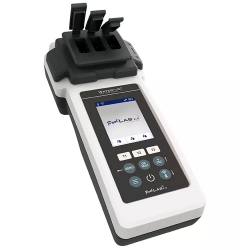
Fotómetro PoolLAB 2.0
Price
129 €

Measuring photometers for the water in private, public, storage and community pools. Devices that provide an exact reading within everyone's reach.
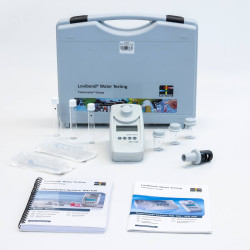
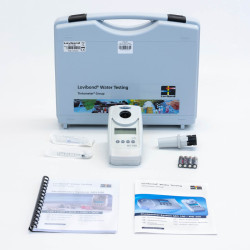
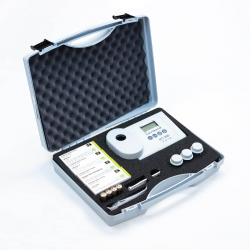
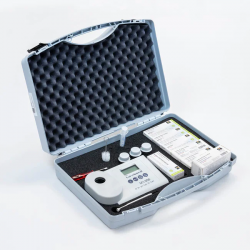
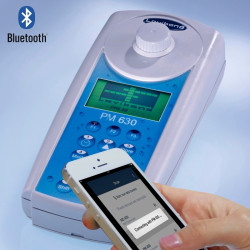
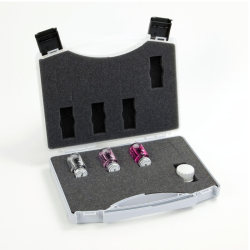
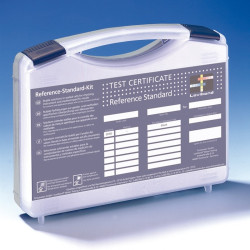
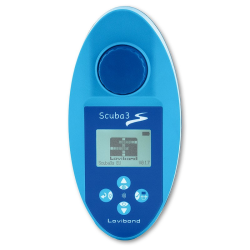
A pool photometer is a device that measures the levels of pH, free chlorine, total chlorine and cyanuric acid in your pool. It is very easy to use and results are obtained almost instantly.
Based on our experience, we recommend the following brands when purchasing a photometer:
A pool photometer must be reliable and accurate — these are the two main reasons why we recommend these brands. In our catalogue you can buy pool photometers from any of them, all offering excellent value for money.
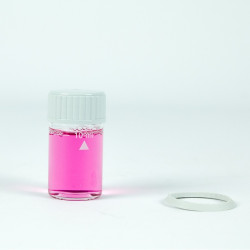
Photometer reagents are chemical products that can come in tablet, powder or liquid form. By adding them to the water sample and waiting approximately 1 minute as a general rule, they will give the water a specific colour through which we can determine its values.
The types of photometer reagents for pools differ depending on the analysis you wish to carry out. Depending on the reagent type, you will be able to measure different parameters:
Using a photometer is straightforward. Simply take a water sample in the container provided with the device, then insert the sample into the unit and press the power button to carry out the measurement.
We recommend reading the instruction manual carefully before use, as depending on the brand, the device may or may not require prior calibration.